Airspace
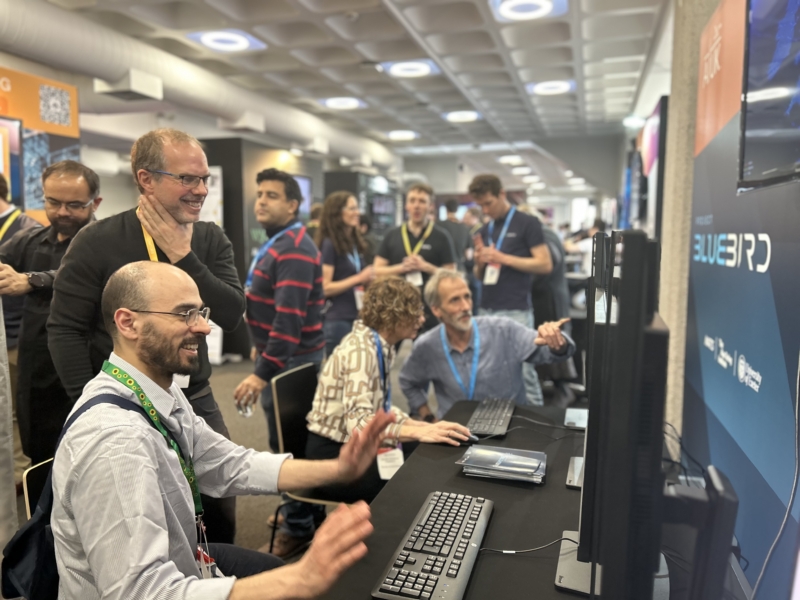

The use and influence of Artificial Intelligence is growing every day and shaping industries worldwide. It appears to be able to do so much for us, but is it just the latest technological trend, or a valuable and worthwhile tool?
Our flagship AI research programme, Project BlueBird, is exploring the practical value of AI in Air Traffic Management (ATM) and its potential to support our future operations.


Small airspace improvements that deliver big benefits
27 February 2024Over the past few years, the Operational Service Enhancements Project (OSEP) has been quietly but significantly transforming airspace operations, culminating in tangible benefits for both operational efficiency and the environment.


Supersonic transatlantic if the Jet Stream blows ferocious?
23 February 2024The last couple of weeks have seen a strong Jet Stream and some rapid transatlantic crossings. That’s prompted some people to wonder if those flights have actually been flying faster than the speed of sound and going super-sonic.


Taking flight: progressing the path to modernise UK airspace
20 February 2024In this blog, Rich Crooks, Manager Airspace Delivery, explains how NATS is progressing the path to modernise UK airspace.

Diversions: Is Improvement Possible?
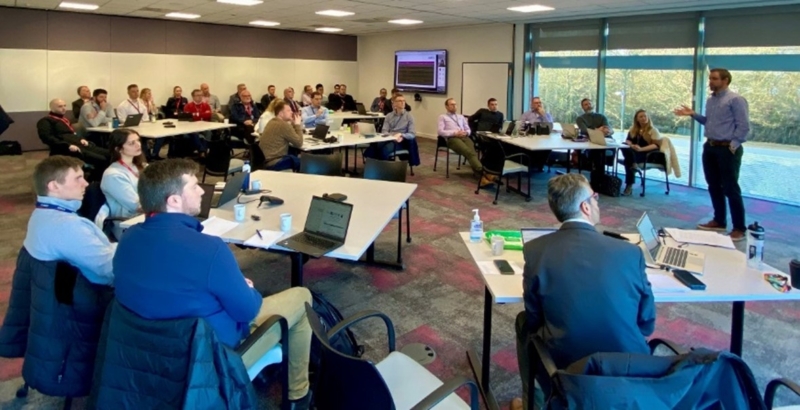
15 February 2024Over 70 representatives from the aviation industry joined us at Whiteley, for a Mass Diversion Exercise to trial a new tool being developed by EUROCONTROL. Airlines, airports, the CAA and Department for Transport helped us carry out a full-scale trial of an electronic interface, designed to improve the management of aircraft diversions during runway closures and weather events.


Riding the storm
22 January 2024It’s very rare for a storm to blanket the whole of the UK and Ireland, as Storm Isha did yesterday. Rarer still for it to deliver the strength of winds that it did. The challenge for the aviation industry is the difficulty for flight crew bringing their aircraft in to land.

Trialling an upgrade to one of the busiest routes in UK airspace
22 December 2023A complex airspace trial, first proposed over a decade ago, is now under way in a first step to freeing up a long standing bottleneck in one of our busiest cross border routes. Cross Border Area 1, a project involving six European ANSPs as well as the French and Belgian military, has reduced a military […]


Working in partnership to support Free Route Airspace
15 December 2023Air Navigation Service Providers (ANSPs) from a number of different states (including EU and non-EU) have been working together to maximise the benefits that FRA can bring.


Leading the Way in Contrail Avoidance
13 December 2023As part of our work to reduce the aviation industry’s non-CO2 emissions, we’re exploring measures to mitigate the impact of contrails – the visible trails of ice crystals that can form behind aircraft flying at high altitudes. Siân Andrews joined over 2,250 scientists, researchers and policymakers at the CANSO/EUROCONTROL Sustainable Skies Conference in Brussels recently to present our work in this area, and how it could contribute to the global push for climate neutrality and sustainability.
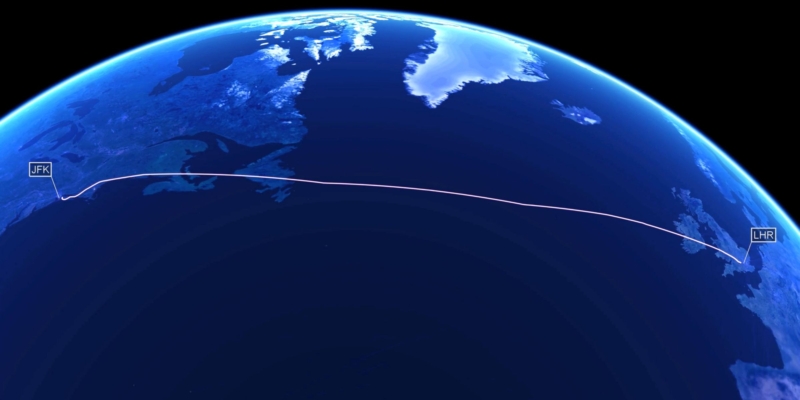

Virgin Atlantic’s Flight100 is a landmark moment, offering a glimpse into commercial long-haul flight powered by sustainable aviation fuel (SAF). This week’s historic flight across the Atlantic showcased the results of a radical collaborative effort, and NATS is proud to have supported this achievement.